

Table of Contents
- Understanding Wooden Flag Weight and Dimensions
- Choosing the Right Wooden Flag Wall Mounting Hardware
- How to Hang a Wooden Flag on Drywall
- How to Hang a Wooden Flag on Brick
- How to Level Wall Art and Secure Your Wooden Flag
- Step-by-Step Installation Guide: How to Hang Wooden Flags Safely
- Preventing Wall Damage and Protecting Your Flag
- Frequently Asked Questions
Last Updated: October 6, 2026
Understanding Wooden Flag Weight and Dimensions
A wooden flag is a solid wood representation of the American flag, typically crafted from individual pieces of wood joined together for a rustic, durable display.

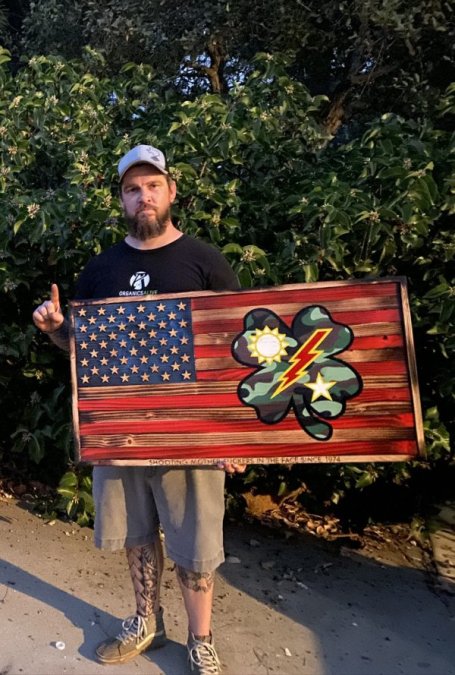
Most wooden flags weigh 3 to 8 pounds, though larger custom pieces can be heavier. Standard sizes typically measure 24 inches wide by 14 inches tall. Weight determines what mounting hardware you need and whether your wall can safely support the piece.
Before you hang a wooden flag, measure its dimensions and weight. Check the specifications or weigh it on a bathroom scale if the weight isn't listed. This prevents choosing inadequate hardware that could fail under load.
Choosing the Right Wooden Flag Wall Mounting Hardware
The hardware you select makes the difference between a secure display and a wall disaster. Different materials require different approaches, and wooden flag weight determines the strength you need.
For drywall, toggle bolts or heavy-duty anchors work best, expanding behind the wall to distribute weight. For brick or stone, masonry anchors or lag bolts handle the load. If you can locate wall studs, wood screws driven directly into the stud provide the strongest hold.
Hardware options break down into several categories:
- Toggle bolts: Best for drywall, hold up to 50 pounds per bolt
- Heavy-duty anchors: Work on drywall, rated for 25-40 pounds
- Lag bolts: Ideal for brick or concrete, rated for 50+ pounds
- Wood screws: Only use when anchored into studs, rated based on screw size
- Brackets: Metal L-brackets or specialized flag brackets distribute weight across multiple anchor points
Most wooden flags work best with two anchor points minimum, which prevents tilting and reduces stress on any single location. For flags larger than 24 inches wide, use three or four anchor points.
Ask for anchors rated for your flag's weight plus 50 percent extra capacity. This safety margin prevents failure if the wall material weakens over time.
How to Hang a Wooden Flag on Drywall
Drywall is the most common interior wall material, but also the weakest. Drywall alone cannot hold heavy objects, so you need anchors that grip behind the wall surface.
Start by finding studs with a stud finder and marking their locations. If studs align with your desired placement, use wood screws directly into them, the strongest option, requiring no anchors.
If studs don't align with your desired placement, use toggle bolts or heavy-duty anchors instead:
- Mark your mounting holes on the wall where you want the flag to hang
- Drill holes slightly smaller than your anchor diameter
- Insert toggle bolts or anchors into the holes
- Tighten according to the anchor manufacturer's instructions
- Attach mounting brackets or hooks to the anchors
Never rely on drywall alone without anchors, since the material crumbles under weight. Test each anchor by pulling firmly before attaching your wooden flag.
How to Hang a Wooden Flag on Brick
Brick is stronger than drywall but not uniform. A 6- to 8-pound wooden flag concentrates its load on two or three mounting points, which can land on a brick face, a mortar joint, or the hollow cavity behind a veneer.
First, identify what kind of brick wall you have. Solid brick (older homes, often two or more wythes thick) can hold lag bolts directly.
Match the anchor to the load, not just the material. A 5-pound flag on two points puts roughly 2.5 pounds of static load per point, but dynamic load from a slamming door or a bump can be several times that.
Drilling without cracking the brick. Use a carbide-tipped masonry bit sized to the anchor's minor diameter and a hammer drill if you have one. Start in rotary-only mode until the bit bites through the glaze, then switch to hammer mode.
Old Glory - Wooden American Flag →
Installation sequence for a wooden flag:
- Hold the flag against the wall and mark the top edge with painter's tape, not pencil, so you do not stain the brick.
- Transfer the flag's mounting-hole spacing to the wall using a template made from cardboard or scrap wood.
- Drill the holes, clean them out, and insert masonry anchors or lag bolts.
- Attach the flag's mounting brackets or keyhole hangers to the anchors, snug but not torqued hard enough to crush the brick face.
- Hang the flag, then check level and test each point with a firm downward pull.
When brick is the wrong choice. If the wall is thin brick veneer over a cavity with no framing within reach, or the brick is already cracked or spalling, do not mount a heavy wooden flag there. A freestanding flagpole bracket, interior wall, or porch post is a safer host.
How to Level Wall Art and Secure Your Wooden Flag
A wooden flag that hangs crooked looks unprofessional. Leveling ensures correct display and even weight distribution across all mounting points.
Use a spirit level to check horizontal and vertical alignment. Place it against the top of your wooden flag and adjust until the bubble sits centered, checking both left-to-right and top-to-bottom.
Mark your mounting holes lightly in pencil before drilling. If the first attempt isn't level, fill the old holes with spackle or caulk and relocate slightly.
For wooden flags with an optional frame, level the frame itself rather than the flag inside it. The frame provides the visual reference for alignment.
Step-by-Step Installation Guide: How to Hang Wooden Flags Safely
Follow this process to hang wooden flags safely without damaging your wall or the flag.
What You'll Need:
- Stud finder
- Drill with bits (standard and masonry if hanging on brick)
- Spirit level
- Measuring tape
- Pencil
- Appropriate anchors for your wall type
- Screwdriver or socket wrench
- Towel or drop cloth to catch dust
Step 1: Locate Studs and Mark Mounting Points (Time: 10 minutes)
Use a stud finder to locate wall studs behind drywall and mark their locations.
Step 2: Drill Mounting Holes (Time: 10-15 minutes)
For drywall without studs: Drill holes for toggle bolts or anchors, following the anchor manufacturer's hole size specifications.
For brick: Use a masonry drill bit and drill slowly into the brick surface.
Step 3: Install Anchors or Fasteners (Time: 5 minutes)
Insert toggle bolts, anchors, or lag bolts according to the manufacturer's instructions. Tighten by hand until snug, do not over-tighten.
Step 4: Attach Mounting Hardware (Time: 5 minutes)
Screw mounting brackets or hooks into the installed anchors. Ensure they're tight and secure.
Old Glory - Wooden American Flag →
Step 5: Mount Your Wooden Flag (Time: 5 minutes)
Hang your wooden flag on the mounting hardware.
Step 6: Level and Verify (Time: 10 minutes)
Use a spirit level to check that your flag hangs straight. Adjust if needed.
Expected Result: Your wooden flag should hang level, secure, and without movement.
Preventing Wall Damage and Protecting Your Flag
Most guides stop at "hang it indoors," leaving out what happens to a wooden flag over years of sun, humidity, and temperature swings, and how to protect both the flag and the wall. This section covers wall-damage basics, then goes deeper on outdoor exposure.
Preventing wall damage.
- Match anchor size to wall type. Oversized anchors tear drywall paper and crumble the gypsum core; undersized anchors pull through under load. If unsure, buy anchors rated for at least twice your flag's weight per point.
- Stay at least 12 inches away from outlets, switches, and visible wiring runs. A stud finder with electrical detection, or a simple non-contact voltage tester, can confirm you are clear before you drill.
- Use painter's tape as a drilling template instead of pencil marks on finished walls. Tape pulls clean; graphite smudges and can bleed through paint.
- To relocate, fill old holes with lightweight spackling, let dry, sand flush, and spot-prime before painting. Skipping primer leaves a dull patch that shows under raking light.
- For renters or anyone who wants a removable option: adhesive picture hangers and removable strips work for light pieces, but most wooden flags exceed their weight limits. Check the strip's rated capacity and stay well under it, and never use them on brick, rough stone, or fresh paint.
Protecting the flag outdoors: the part most guides skip.
A wooden flag on a porch or exterior wall faces four stressors: UV light, moisture, temperature cycling, and airborne grit, each attacking a different part of the piece.
- UV light fades stains and paints and can gray unfinished wood within a season or two. A spar urethane or exterior-grade polyurethane topcoat with UV inhibitors slows this dramatically. Reapply every one to three years depending on sun exposure.
- Moisture is the bigger threat. Wood swells when it absorbs water and shrinks as it dries, and that cycle opens glue joints and causes cupping or warping. A covered porch or an overhang that keeps direct rain off the flag is the single most effective protection. If the flag must face the weather, make sure the back is sealed as well as the front, and that water cannot pool in any recessed area.
- Temperature cycling stresses the joints between boards. A flag that is glued and screwed holds up better than one that is glued only. If you notice a joint opening, address it before the next freeze-thaw cycle.
- Corrosion-resistant hardware matters outdoors. Standard zinc-plated screws rust within a year or two in humid or coastal air. Use stainless steel or hot-dip galvanized fasteners and brackets, and check them annually for rust streaks that can stain siding.
When to bring the wooden flag indoors.
Bring it in, or plan to refinish it, if you see any of these: finish peeling or chalking, dark streaks that look like mold or mildew, joints opening, boards cupping, or rust stains around the hardware.
Indoor care is simpler but not nothing. Keep the flag out of direct window sun, avoid hanging it above a heat source or in a humid bathroom, and dust monthly with a dry microfiber cloth. Skip water-based cleaners, which raise the grain and dull the finish.
Frequently Asked Questions
What hardware should I use to hang a heavy wooden flag?
Heavy wooden flags require heavy-duty mounting hardware. Use lag bolts or lag screws if mounting into a stud, or heavy-duty toggle bolts and wall anchors rated for 50+ pounds on drywall. For brick, use masonry anchors or concrete screws. The weight of handcrafted solid wood flags means the mounting system must support 30-50 pounds or more, depending on size and wood type.
Can you hang a wooden flag on drywall without a stud?
Yes, but only with proper anchors. Use heavy-duty toggle bolts, molly bolts, or specialized drywall anchors rated for the flag's weight. These distribute force across a wider area of drywall. However, studs provide the strongest support. Always find studs first using a stud finder; if none align with your preferred placement, heavy-duty anchors are your next best option for how to hang a wooden flag on drywall safely.
How do I find a wall stud before hanging a wooden flag?
Use an electronic stud finder, which detects the density change where studs are located. Studs are typically spaced 16 inches apart. Mark the center of the stud with a pencil. You can also tap along the wall and listen for a solid sound, or look for nail pops and electrical outlets, which are often fastened to studs. Studs provide the most secure anchor point for how to hang a wooden flag safely.
How high should a wooden flag be hung on a wall?
Mount your wooden flag so the center sits at eye level, typically 57-60 inches from the floor. On a porch or entryway, position it prominently so it's visible from outside. Ensure the flag doesn't touch the ground and maintains proper orientation with the canton (stars) in the upper left. Positioning and orientation matter for both aesthetics and flag etiquette when displaying your handcrafted wooden flag.